New versions and new series of the UniTree Robots 宇树机器人
Advancing AGIBOT robotics with Arm technology
Abstract. The Metaverse is commonly described as the forthcoming stage of web development, marking a shift from 2D interfaces to VR- and 3D-based interaction. Despite this progression, there is a lack of effective tools for search-ing and accessing art within 3D environments, and many existing solutions are proprietary, restricting both artists and users. The Visio Creativia project seeks to address these limitations by providing free, open-source tools for producing Metaverse-compatible 3D art galleries. Using AI-based procedural generation, the toolkit enables creators to construct customised galleries without requiring programming expertise, thereby improving transparency and control over digital assets. Supported by the EU Next Generation Internet initiative, Visio Creativia has the capacity to strengthen the preservation and dissemination of digital art while enhancing accessibility and trust.
Abstract: This keynote speech proposes and structures AI as the transition from the technology & model waves to the future stage, high level and top layer, where artificial intelligence, artificial general intelligence (AGI), in particular, and smart robots will get embedded in daily life and systems: daily life, science, engineering, industries, entertainment, healthcare, transport, government, creative work, education. We link real signals of this great shift or change with the future.
Firstly, Elon Musk’s interview discussions about AI abundance and Universal High Income (UHI) highlight how the economy of work could be impacted if robotics and AI accelerate as predicted. Secondly, NVIDIA shows accelerated computing and the compute flywheel driving the era to the next-generation chip roadmap pushing AI into real-world labs and applications. Thirdly, Arm Cambridge partly represents the UK’s strategic position in energy-efficient compute, crucial for scaling AI from cloud to edge while maintaining power and cost to be more sustainable. Fourthly, Google and IBM quantum computers and hybrid quantum–classical–AI will expand and accelerate the speed and frontier of feasible computation for civilization and will also reshape the future economies. Fifthly, large Language Models (LLMs) such as GPT, as popularised through ChatGPT, represent a major step towards widely accessible cognitive tooling for future civilisation, that will support human learning, creativity and problem-solving at scale, assisting with the more connected and informed society and communities.
The new era of AI
AI and AGI as the foundation of intelligent civilisation
Musk, AI & AGI, Economy, work and UHI
Nvidia GPUs, compute flywheel and the opportunities T
he UK and ARM Cambridge perspective
Google and IBM quantum computers
LLMs and future civilization
Risks, hallucination, trust, ethics, governance, universal love for code, human sovereignty.
Abstract: As AI systems become integrated into every aspect of our lives, a key challenge is to ensure that they are built to empower, rather than to disempower humans. I discuss the nature of human agency, and the ways that it is enhanced or degraded by technology. I summarise recent evidence which has explored how humans are empowered or disempowered when they interact with conversational AI systems. I conclude by talking about potential technical solutions for enhancing human agency using AI.
Abstract: Artificial intelligence (AI) is transforming programmatic advertising by reshaping how digital media is valued, purchased, and optimized at scale. As algorithmic systems increasingly guide decisions about audience targeting, budget allocation, and performance optimization, the role of human decision makers is evolving from manual operators to strategic collaborators with intelligent systems. Understanding this shift is essential to the future of digital advertising and enterprise decision-making.
This work explores how AI influences decision-making power in programmatic markets and considers the broader implications of transparency, trust, and calibrated reliance in algorithmically mediated environments. Rather than viewing AI solely as a tool for automation or efficiency, programmatic advertising can be understood as a dynamic system in which human judgment and machine intelligence continuously interact and adapt. Effective collaboration depends not only on predictive accuracy but also on system design choices that support learning, strategic thinking, and responsible allocation of media investments.
By situating AI within the economic and institutional foundations of digital advertising, this discussion highlights how transparency and decision support shape not only campaign performance but also brand integrity and the sustainability of the broader media ecosystem. It offers a forward-looking perspective on human–AI collaboration and outlines guiding principles for designing AI systems that strengthen performance, accountability, and long-term value creation in programmatic advertising.
Abstract: This keynote will examine the transformative potential of creative technologies across diverse application settings, with a particular focus on education, highlighting how these tools can enrich learning experiences and foster deeper engagement. The presentation will explore how advanced sensing technologies, such as physiological and cognitive monitoring tools, can provide meaningful insights into learners’ attention, emotion, and motivation, informing the design of adaptive, learner-centered educational experiences. Additionally, the talk will showcase a range of gamification projects (such as serious games and interactive simulations) that employ game mechanics strategically to enhance participation and sustain motivation over time. Attendees will gain insight into how ‘thoughtfully’ designed gamified experiences can complement traditional pedagogy and support measurable learning gains. Furthermore, the talk will discuss emerging opportunities and challenges associated with metaverse data, as a platform for immersive education, collaborative learning, and experiential exploration.
Abstract: Extracting reliable and actionable insight from complex, heterogeneous data remains a central challenge in modern information management. This keynote presents a unified research program that progresses through four stages, namely measure, trust, segment, and understand, where each stage is motivated by the limitations of the preceding one. The first stage employs Data Envelopment Analysis as a nonparametric framework for benchmarking organizational performance by constructing an empirical production frontier, with applications spanning Olympic achievement evaluation, banking assessment, and public utility management. However, when data are noisy, a single efficiency score may not be sufficiently trustworthy for high-stakes decisions. The second stage addresses this limitation by embedding probabilistic structures into frontier estimation. Stochastic Nonparametric Envelopment of Data, forest-based resampling, and hierarchical conditional forests replace fragile point estimates with distributional inference, equipping efficiency scores with confidence intervals and enabling principled productivity change measurement. Yet evaluating all organizations against a single frontier implicitly assumes homogeneity, overlooking structural differences in scale, geography, or operating environment. The third stage tackles this heterogeneity through the Mixed-Copula Mixture Model framework and its open-source implementation pymcmm, which provides a principled approach to clustering datasets containing continuous, discrete, and categorical variables with missing values. By uncovering latent group structures, such as water utility clusters or consumer segments with shared behavioral patterns, the analysis gains both accuracy and policy relevance. The fourth stage leverages explainable AI techniques, specifically SHAP and ICE analyses, to translate complex analytical outputs into transparent, interpretable narratives that support evidence-based action for non-technical stakeholders. Throughout, a running case study in sustainable water utility management demonstrates how these four stages connect end to end. The integration of rigorous measurement, uncertainty quantification, flexible clustering, and post-hoc interpretability offers a cohesive approach to evidence-based decision support in information management.
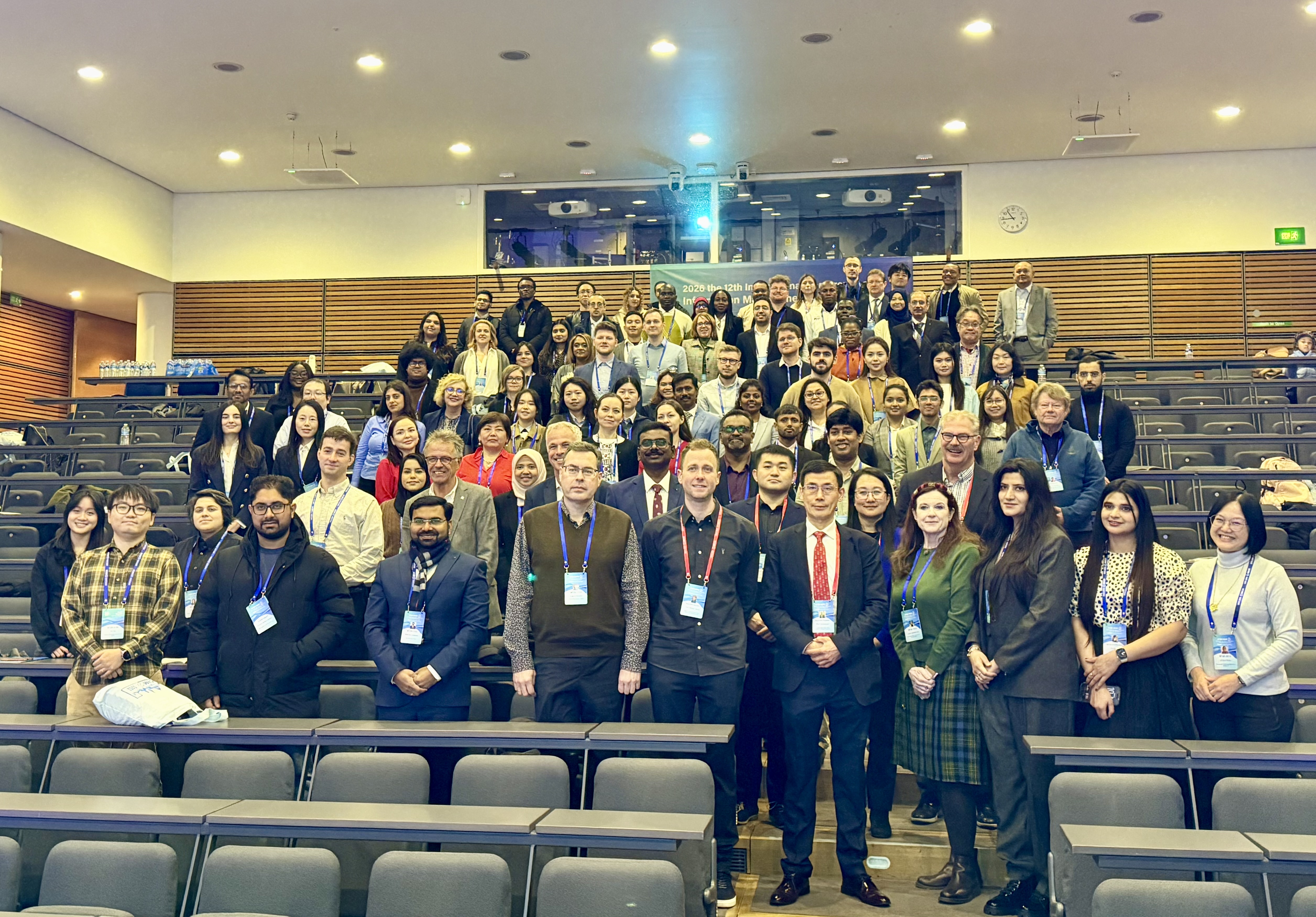
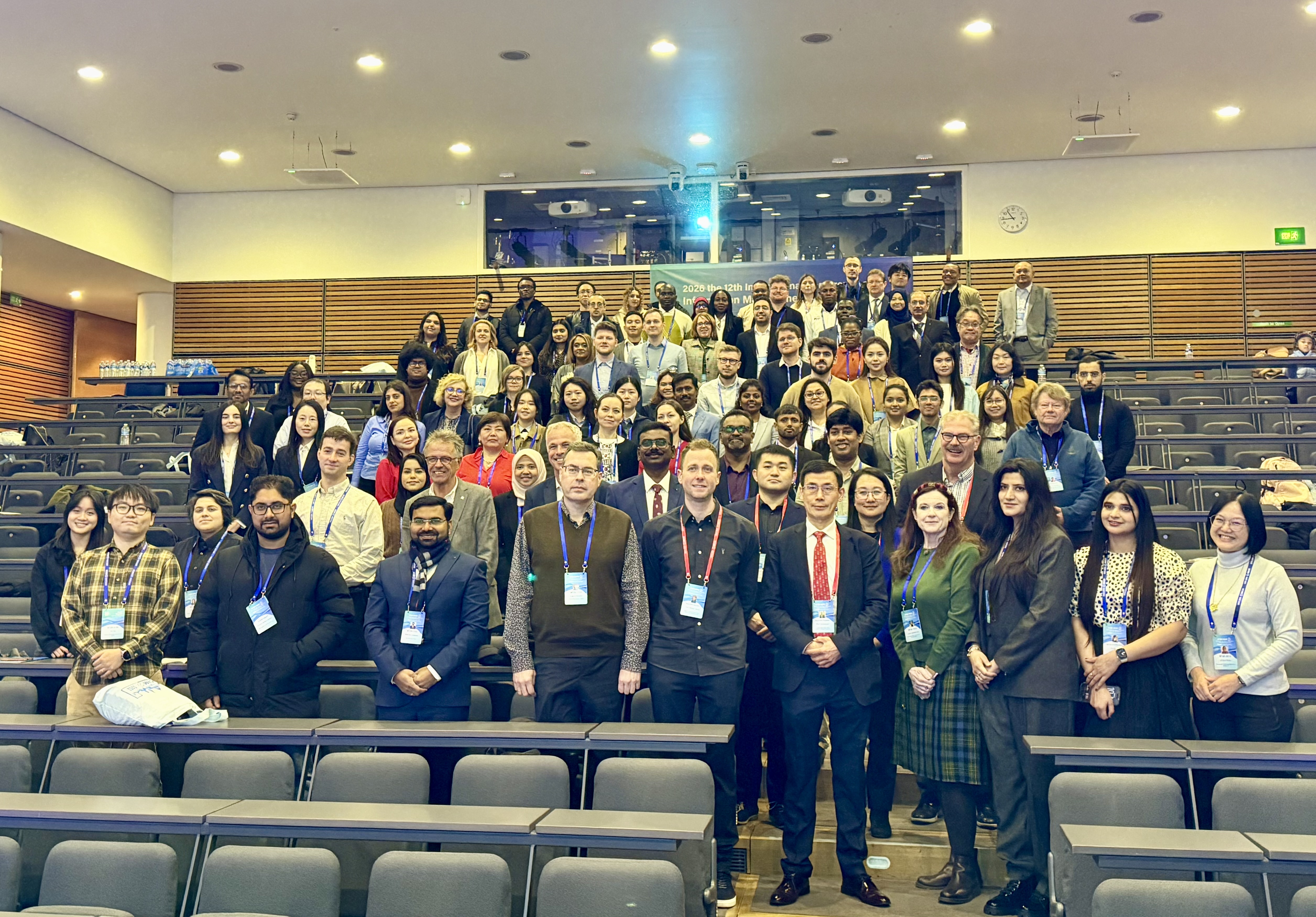
ICIM 2026 & ICIM-ITAI at Saïd Business School of the University of Oxford, UK, on 28 March 2026. As the committee chair, my special thanks go to Prof Dr Christopher Summerfield (University of Oxford), Prof Dr William Hurst (Wageningen University & Research, the Netherlands), Prof Dr Hua Dai (California State University, USA) and Prof Dr Yu Zhao (Tokyo University of Science, Japan) , Prof Dr Mark Salisbury (University of St. Thomas, USA), the authors and the reviewers worldwide.
Loxbridge High-Tech Forum
https://loxbridge3i.co.uk
(Forum & conference series with research & consultancy on IT & AI for business, industries, civilisation & education)
https://loxbridge3i.co.uk/cfp.php
ICIM 2026 & ICIM-ITAI at Saïd Business School of the University of Oxford, UK, on 28 March 2026. As the committee chair, my special thanks go to Prof Dr Christopher Summerfield (University of Oxford), Prof Dr William Hurst (Wageningen University & Research, the Netherlands), Prof Dr Hua Dai (California State University, USA) and Prof Dr Yu Zhao (Tokyo University of Science, Japan) , Prof Dr Mark Salisbury (University of St. Thomas, USA), the authors and the reviewers worldwide.
Loxbridge High-Tech Forum
https://loxbridge3i.co.uk
(Forum & conference series with research & consultancy on IT & AI for business, industries, civilisation & education)
https://loxbridge3i.co.uk/cfp.php
Loxbridge High-Tech Forum has officially published the programme for the International Forum on Information Management, IT & AI (IFIMITAI), scheduled for 28 February 2026. The forum continues the organisation’s commitment to supporting interdisciplinary discussion across information management, digital innovation, artificial intelligence, and emerging computing technologies.
The programme outlines an international line-up of chairs and speakers from institutions and organisations including the University of Oxford, Tokyo University of Science, California State University Channel Islands, Wageningen University & Research, Zhengzhou University, and Loxbridge High-Tech Forum. The event is hosted online through Zoom and is structured to accommodate both China Beijing time and UK London time.
Topics featured in this programme include AI-enabled deception in e-commerce, long-term incentive structures in cross-border technology firms, AI data analysis and quantum models, VR, AR, metaverse and digital artistry, smartphone usage reduction studies, human-AI trust calibration, technology data security governance, data solutions for the energy sector, and broader reflections on intelligent civilisation, computing, and AI.
The programme also notes that relevant papers and abstracts are expected to be formally published in the conference proceedings or eBook, with collection and coverage by the British Library. This strengthens the academic and archival value of the event while giving participating researchers a clearer publication pathway.
From a Loxbridge website perspective, this News item is an important example of how the updated News & Lighthouse of Thought page can present a formal conference announcement together with an attached programme PDF. It also demonstrates how one entry can combine a concise summary, institutional credibility, practical event details, and supporting documentation in one place.
The attached PDF programme should be consulted for the full running order, speaker names, timings, and session titles.
- Event: International Forum on Information Management, IT & AI (IFIMITAI)
- Date: 28 February 2026
- Format: Online via Zoom
- Organiser: Loxbridge High-Tech Forum (UK)
- Main themes: AI, information management, metaverse, data security, digital research, and intelligent systems